The Interplay of Cantonal Licensing Rules and Poker App Feature Rollouts Across Swiss Gaming Venues
Dana Reed · Oct 9, 2026
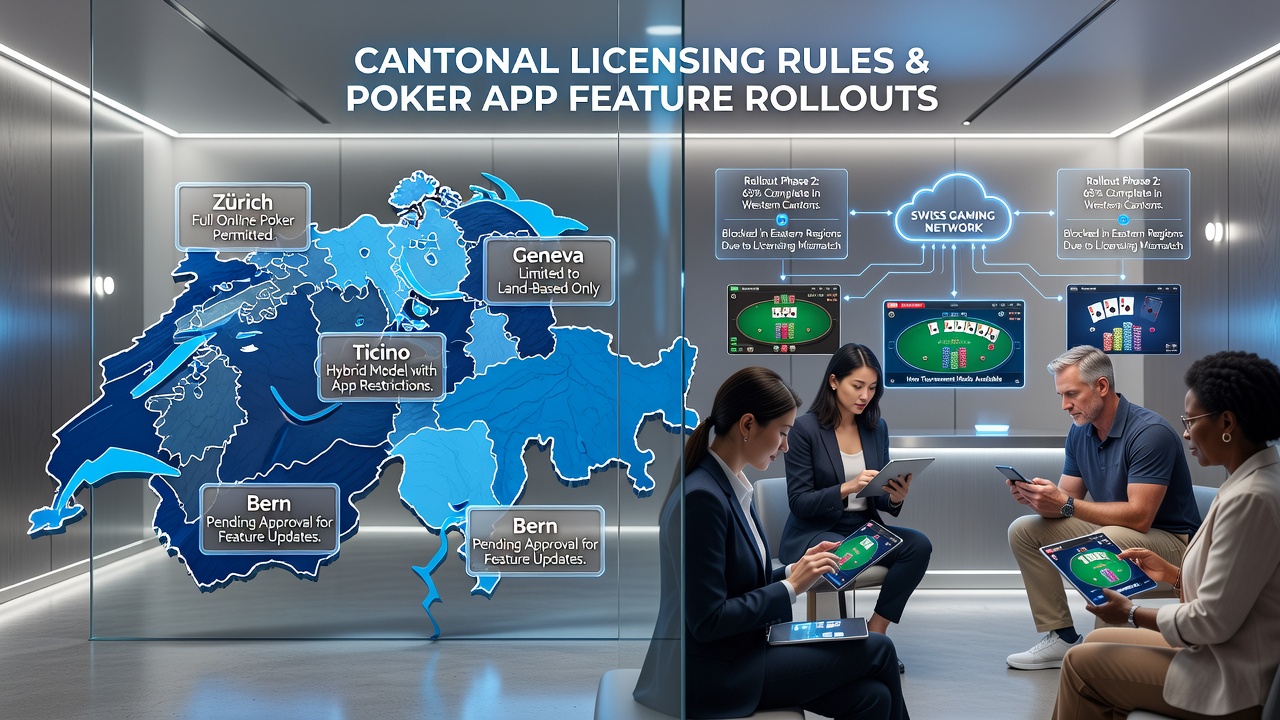
The Interplay of Cantonal Licensing Rules and Poker App Feature Rollouts Across Swiss Gaming Venues
Switzerland's federal structure divides gambling oversight among 26 cantons, each applying distinct licensing criteria that directly shape how poker app developers introduce new features at physical venues. Cantonal authorities review app integrations case by case, requiring compliance with local rules on player verification, payout mechanisms, and data handling before any rollout proceeds. This decentralized process creates staggered timelines across regions, with some cantons approving updates within weeks while others extend reviews over several months.
Cantonal Licensing Variations Shape App Development Cycles
Each canton maintains its own gaming commission that evaluates technical specifications of poker apps against venue-specific permits, and these evaluations focus on elements such as geofencing accuracy and transaction logging. Data from the Swiss Federal Office of Justice shows that approvals in Geneva and Zurich often emphasize privacy controls, whereas approvals in smaller cantons like Uri prioritize real-time monitoring of table limits. Developers therefore sequence feature releases to align with the most restrictive jurisdictions first, allowing subsequent cantons to reference prior clearances during their assessments.
Observers note that licensing conditions frequently dictate the order in which features appear, for instance requiring age-verification modules to activate before any loyalty program elements become available. Research conducted by the University of St. Gallen indicates that apps released in 2025 followed this pattern, with verification tools launching six to eight weeks ahead of tournament scheduling functions in multiple venues.
Feature Rollouts and Venue Integration Patterns
Poker apps must embed canton-specific modules that adjust betting caps and session timers according to local statutes, and these modules update automatically once a venue's license renewal confirms compliance. Venues in Basel-Stadt have documented faster adoption of multi-table tournament features compared with those in Valais, where additional documentation on responsible gaming prompts delays deployment by an average of four weeks. Industry reports from the European Gaming Association highlight that such differences stem from varying interpretations of the same federal minimum standards rather than outright conflicts in regulation.

Take one operator who coordinated a cross-canton update in early 2026: the company submitted identical code packages to all relevant commissions yet received staggered green lights, resulting in simultaneous availability in only nine of the 26 cantons by March. This staggered pattern continued into October 2026, when several eastern cantons cleared an in-app chat moderation tool that had already operated in western regions for five months. The delay allowed regulators in the later cantons to study usage statistics before finalizing their decisions.
Technical Adaptations Required by Decentralized Oversight
App architects design modular codebases that isolate features subject to cantonal review, enabling quick swaps or toggles without full resubmission. According to figures released by the Canadian Centre for Gaming Research, similar modular approaches in other federated systems reduced average approval times by 30 percent, and Swiss developers have adopted comparable structures to manage their own multi-jurisdictional environment. Real-time analytics dashboards then track feature performance per canton, supplying commissions with localized data that supports faster subsequent reviews.
Venues integrated with these apps report that updates to payment rails and tournament structures require separate sign-off from both the canton and the venue operator, creating a dual-approval loop that extends project schedules. One study of 2025 rollouts revealed that features involving player-to-player transfers encountered the longest review periods because they triggered additional scrutiny under cantonal data-protection ordinances.
Future Coordination Efforts Across Cantons
Meetings among cantonal gaming commissions have increased since 2024, with participants discussing standardized templates for app feature submissions that could reduce duplication. Although no binding agreement has emerged, preliminary frameworks circulated in mid-2026 outline shared testing protocols for geolocation and identity modules. These discussions coincide with planned updates scheduled for October 2026, when several apps intend to introduce unified leaderboard systems contingent on receiving parallel approvals from at least fifteen cantons.
Evidence from regulatory filings shows that successful coordination in one feature area often accelerates clearance in adjacent areas, as commissions gain familiarity with an operator's technical documentation. This incremental alignment continues to influence how quickly new poker functionalities reach players across Swiss gaming venues.
Conclusion
The relationship between cantonal licensing procedures and poker app feature deployment remains dynamic, driven by each region's independent review processes and the technical flexibility of modern software architecture. Continued data sharing among commissions and operators supports more predictable rollout schedules, while venue-level integration requirements add layers of verification that developers must accommodate. As October 2026 approaches, further synchronized updates may emerge if current coordination discussions yield practical templates that multiple cantons can apply uniformly.